





CHINA SOURCING / U.S. HOTEL PROJECTS
How to Import Hotel Furniture from China
A buyer’s checklist for supplier verification, specifications, samples, production control, shipping documents and U.S. import planning.
Importing hotel furniture from China is a project-control exercise. The commercial result depends less on finding a catalog price and more on aligning the buyer, designer, manufacturer, freight team, customs broker and site team around the same approved information.
Confirm who signs the contract, manufactures the goods and receives payment.
Connect the BOQ, drawings, finish samples and mock-up decisions to production.
Assign importer, broker, documents, packing and destination responsibility early.
1. Verify the supplier and legal entity
Ask for the company’s legal name, registered address, business license, bank beneficiary and manufacturing location. Confirm whether the business is the factory, an export company, a brand or a sourcing agent, and make the relationship visible in the contract.
Lenatees is the export brand of Foshan Hong Sui Xiang Furniture Co., Ltd. This legal entity signs contracts, manufactures the products and receives payments. Buyers should perform the same counterparty check with any shortlisted supplier before sending a deposit.
Use the Foshan furniture factory overview and the separate guide on auditing a hotel furniture manufacturer to prepare due-diligence questions.
2. Issue a pricing-ready RFQ
A supplier cannot quote accurately from inspiration photos alone. Provide a furniture schedule or BOQ, room types, quantities, dimensions, drawings, material direction, destination and target milestones. Where information is not final, identify it as an assumption and require the quotation to show the allowance.
| RFQ document | What it should control | Approval output |
|---|---|---|
| BOQ / furniture schedule | Item code, room or area, quantity and quotation revision. | Comparable line-item price and exclusions. |
| Drawings | Dimensions, interfaces, construction intent and installation conditions. | Supplier shop drawings and RFI log. |
| Finish specification | Substrate, surface, color, sheen, hardware, stone, metal and upholstery. | Signed finish board or sample register. |
| Project requirements | Testing, documentation, packing, labels, inspection and delivery sequence. | Agreed quality plan and packing plan. |
3. Approve samples before mass production
Use physical samples and, where appropriate, a prototype or mock-up room to confirm the details that drawings cannot fully communicate. Record the revision, material code, finish, hardware, dimensions and approver. The production team and inspectors should work from the same signed reference.
- Finish board for wood, laminate, metal, stone, glass and upholstery.
- Hardware schedule for hinges, runners, handles, locks, glides and electrical interfaces.
- Shop drawings showing dimensions, fixing, service access and room-specific variations.
- Prototype or first article for important custom pieces.
- Written change control for every approved substitution or value-engineering decision.
The hotel room furniture page shows how guestroom items can be grouped into one coordinated package rather than purchased as unrelated products. Relevant bedroom furniture categories can then be used to review individual product types.
4. Inspect production, packing and labels
Define inspection points before production begins. Checks may cover incoming materials, dimensions, construction, finish, function, upholstery, approved-reference matching, quantity, packaging and carton marks. For phased hotel delivery, labels should identify the furniture code, room type, floor or zone and package number.
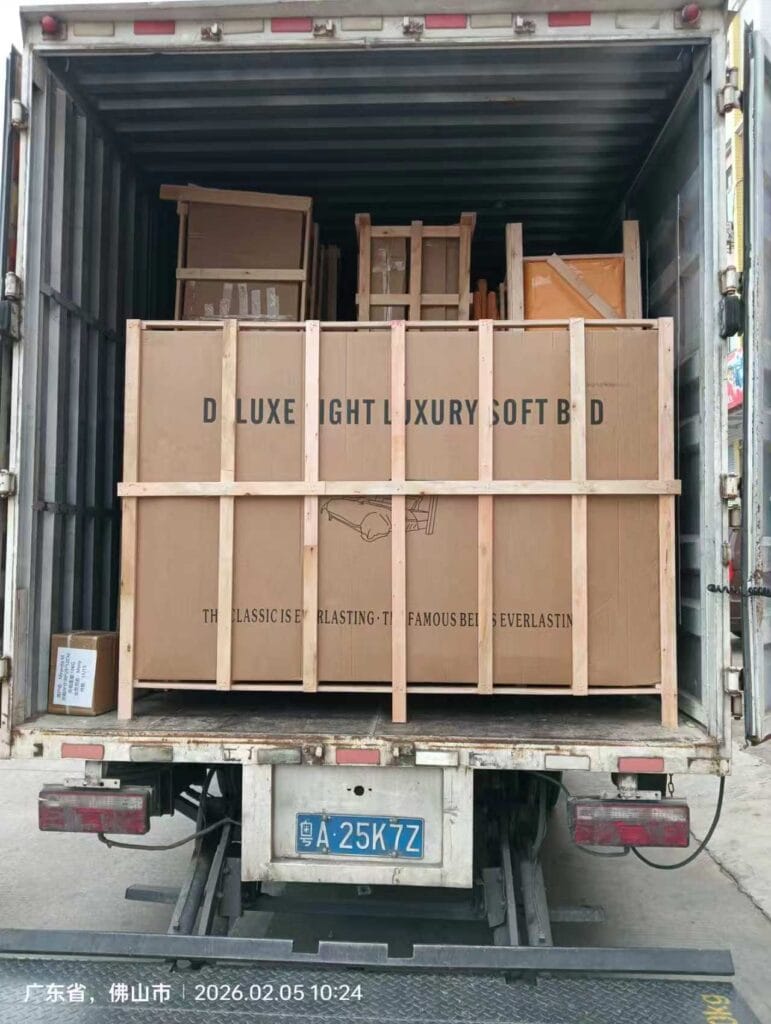
Solid-wood pallets, crates and other regulated wood packaging entering the United States generally need to meet ISPM 15 requirements. USDA APHIS states that regulated wood packaging material must be pest-free, debarked, treated and marked with the ISPM 15 logo. Confirm the exact packing scope with the freight and compliance team before loading.
5. Assign import and delivery responsibilities
Before shipment, confirm the agreed Incoterm or delivery term, importer of record, customs broker, freight booking party, insurance, documents, port charges, delivery appointment, unloading, storage and installation. A broker can assist with entry, but CBP states that the importer remains ultimately responsible for knowing and meeting applicable requirements.
Use the hotel FF&E procurement page to coordinate BOQ, approvals and delivery, and review hotel project references for comparable applications.
First-party project and production evidence
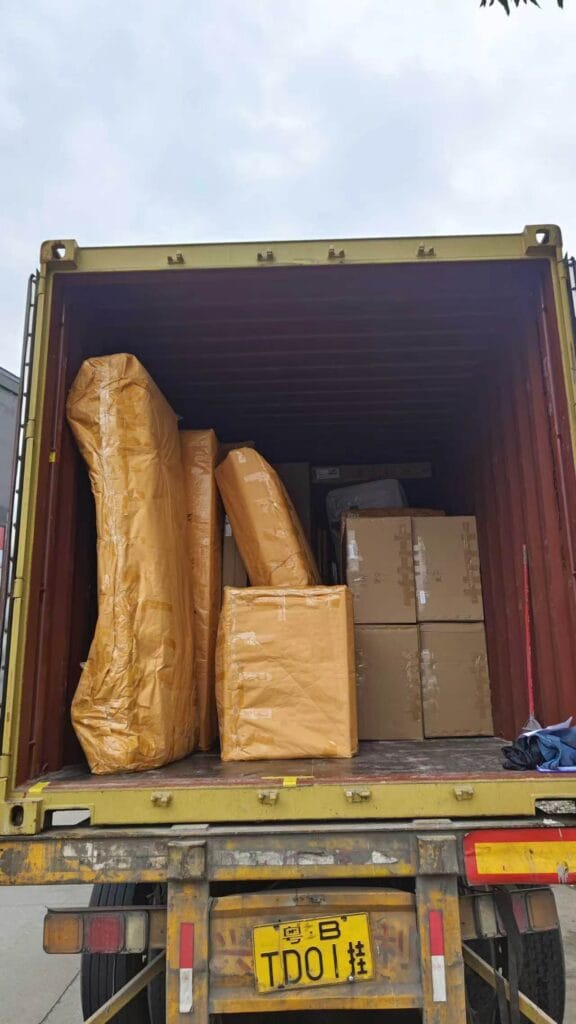
First-party loading images document the physical packing and container stage discussed in the import workflow.
IMPORT PROJECT REVIEW
Planning a hotel furniture shipment from China?
Send your company, project location, room count, BOQ or drawings, item quantities, finish direction and delivery destination. Lenatees can review the manufacturing scope; the buyer’s qualified broker and compliance team should confirm destination import requirements.
Sources and limits
- U.S. Customs and Border Protection, customs broker and importer responsibility guidance.
- USDA APHIS, importing ISPM 15-compliant wood packaging material into the United States.
- This article is general planning information, not legal, customs or tax advice. Requirements vary by product, project and destination.