





How to Audit a Hotel Furniture Manufacturer in China
Take one item from your guestroom schedule into the workshop. Ask the supervisor to show which drawing the operator uses, which sample the inspector checks against, and which carton the receiving team will open. If those records tell different stories, you have found something to resolve before you place the order.
Before the visit: choose the item and the people you need
A nightstand with a fitted drawer makes a useful starting point: the buyer can see the finish, operate the runner and check whether the correct hardware reached the bench. If your largest risk is outsourced upholstery or a wall-mounted headboard, choose that item instead. A factory that makes its own cabinets may buy its metalwork elsewhere. Ask which site will do each operation, who checks the returned components and who can authorize a change.
Send the item code, room type, quantity, drawing revision and finish reference in advance. Ask to meet the person who releases drawings and the person who handles rejected parts. If your order has not started, request records from a comparable job with the customer details removed. On a video visit, ask the operator to show the drawing revision and part label close up. Mark any stage you could not see. There is no need to collect another hotel’s names or prices.
For background on evaluating a production site and its suppliers, see FIRA International’s Sourcing furniture products in the supply chain, V2 (2024), §4.1, p. 30. It is a UK guide; the checks below are purchasing decisions for your project.
On the floor: follow one drawer from drawing to carton
- Start at the bench. Ask the operator to pull up the drawing used today. Match its item code and revision to the buyer’s copy. If the copies differ, find out which units were made under each revision before inspecting the sample.
- Read the label on the runner. Compare the part reference on the drawing or bill of materials with the bag at the bench. If a subcontractor fitted it, ask for the instruction sent to that shop and the incoming check made when the drawer returned. A supplier invoice identifies a purchase; it doesn’t show which drawer received the part.
- Try the assembled drawer. Open it to its stop, check access to the back and compare the movement with the signed sample. Ask the inspector where they recorded a mismatch and who rechecked the correction. FIRA describes keeping an approved reference sample for final comparison in §4.6, pp. 35–36. Agree any test loads or acceptance limits in your own specification.
- Finish at packing. Read the room type and item code on a carton, then find that carton on the packing list. For furniture with loose hardware, ask the packer to locate the fittings bag. A total carton count can agree while the pieces for one room are still split across deliveries.


What to do when the sample and the paperwork disagree
Example, not a Lenatees project: the approved guestroom nightstand has a full-extension runner. The sample closes neatly, but the runner on the production bench stops short. The finish board still matches. Approving the finish does not resolve the change in drawer access.
Write down the two part references and the affected item code. Ask the supervisor to identify completed pieces, work in progress and spare parts that may carry the substitute. The factory can fit the specified runner and present a corrected drawer. If it proposes keeping the alternative, have the buyer try it in the mock-up and decide in writing. Only then update the drawing, parts list and inspection reference together.
- Proceed to a mock-up
- The supplier can trace the item to its drawing, component and inspection record. Name the sample you are authorizing and what the buyer will check. Mock-up approval and release of the full order are separate decisions.
- Hold the affected item
- The approved reference is missing or a substitution is unresolved. Name who will supply the record or corrected piece, when it is due, and which work can continue without using that part.
- Recheck the process before award
- If the supervisor cannot identify which units or subcontractor were involved, a photo of one repaired drawer cannot close the finding. Ask to see the updated instruction used on another unit and its receiving or inspection record before releasing that scope.
The blank Lenatees product inspection form shows why the record matters. Both “pass” and “rework” are printed on it; neither tells you what happened to the item. Ask for a completed copy and check the model, the inspector’s name and the date. If it calls for rework, keep the finding open until you have a dated recheck that identifies the corrected piece and the person who checked it.
One line per finding is enough for your visit notes: item and revision · what you saw · record or photo reference · decision · owner and due date · evidence that closed it. Keep an unanswered question open instead of recording it as a pass.
Read the scope on a test report before accepting it
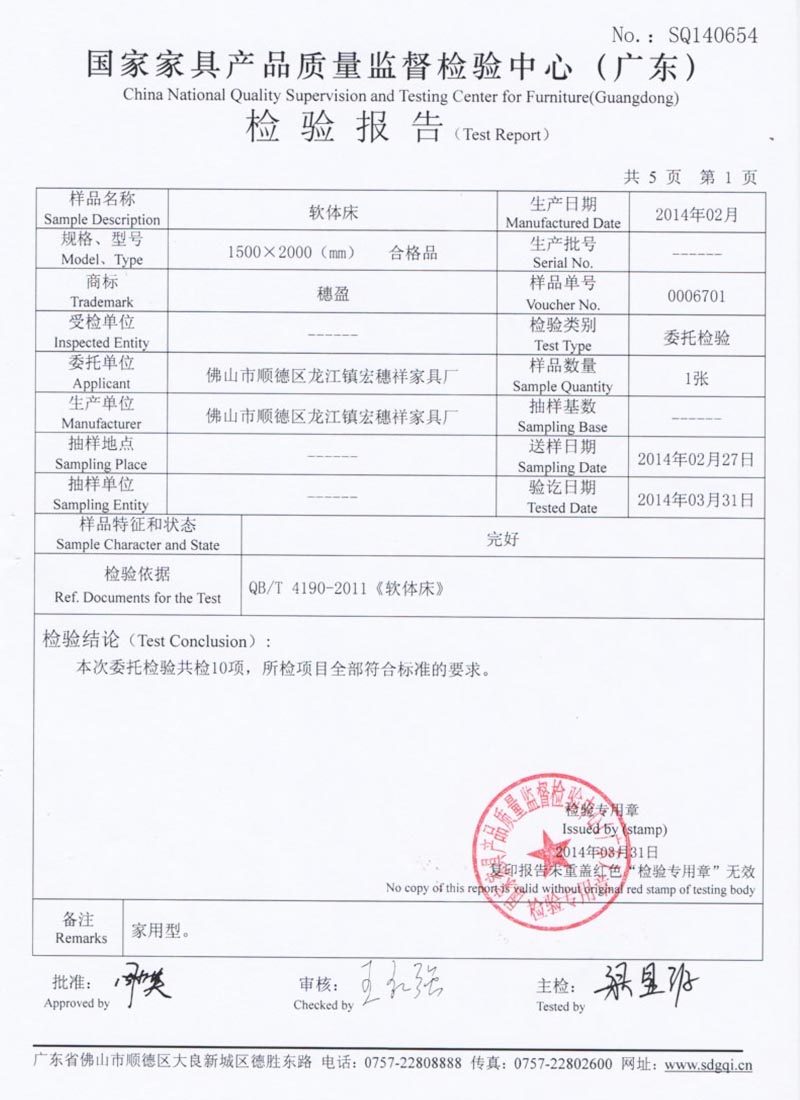
Lenatees publishes a useful example. The 31 March 2014 household upholstered bed report concerns one submitted 1500 × 2000 mm sample. On page 1 of report SQ140654, the laboratory records that all ten items it checked on that sample met the requirements of QB/T 4190-2011. It gives no result for the nightstand above or for a different hotel bed. Ask for the complete report and match the applicant, item, construction and intended use to your order before relying on it.
A report for a sample, a factory visit and an inspection of a production lot answer different questions. For your own order, agree what the inspector will look at using the furniture quality-control checkpoints. For a certificate about the management system itself, ISO’s introduction to quality management systems explains what that system covers.
Put the decision into the quotation
Attach the approved drawing and sample references to the quotation, and list any open conditions against the item they affect. For example: “Nightstand: quote the specified full-extension runner. Show any alternative as a separate option; buyer approval required before use.” This gives another supplier the same scope to price and gives the inspector a clear reference later.
One Lenatees wardrobe quotation from 2026 includes a top cabinet for one range and lists it as optional for another. For a third range, it warns that the top cabinets for the wardrobe, side cabinet and desk are not interchangeable. When comparing two bids, have each supplier identify the matching top cabinet on the drawing and say whether it is included. Carry that reference onto the packing list so the receiving team can put the right pieces together.
To arrange a review with Lenatees, send the room schedule and the item you want to follow to the project team. You can check the company identity, Foshan factory information and manufacturing stages before deciding whom to meet. Use the hotel project references and bedroom furniture range to pick a relevant item.
Planning a U.S. shipment as well? The hotel furniture import guide covers the handover to your broker. The importer’s entry obligations are set out in 19 U.S.C. § 1484(a)(1).