




HOTEL FF&E PROCUREMENT / BUYER GUIDE
Hotel FF&E Procurement Checklist: From BOQ to Delivery
A practical procurement path for hotel owners, designers and purchasing teams who need a comparable furniture package—not a collection of disconnected quotations.
Hotel FF&E procurement succeeds when the project team controls the same information from design development through shipment. The essential question is not simply “which supplier has the lowest price?” It is whether every bidder is pricing the same scope, the same material standard and the same delivery responsibility.
Freeze room types, public areas, loose furniture, casegoods, quantities and exclusions before sending an RFQ.
Use a controlled BOQ, approved drawings and finish references so quotations can be compared line by line.
Approve samples, mock-ups and inspection points before the full production run begins.
Start with a pricing-ready FF&E package
A useful RFQ does not need every decorative detail finalized, but it must identify the items that drive cost and risk. This is particularly important for guestroom furniture, where headboards, nightstands, desks, wardrobes, minibar units, luggage benches and seating must align with the room layout and services.
- Furniture code, room or area, quantity and target installation date.
- Plans, elevations, dimensions and interface locations for power, plumbing or AV where relevant.
- Material direction: substrate, veneer, laminate, upholstery, metal finish, stone or glass.
- Performance requirements, destination-market rules and required documentation.
- Packaging, floor/room labels, delivery sequence and unloading responsibility.
For manufacturer-side scope review, approvals, production, inspection, packing lists and delivery sequencing, see our hotel FF&E supply and production coordination page. For a hospitality-led furniture scope, begin with the hotel furniture manufacturing overview, then use the hotel room furniture package page to organize guestroom items. Public-area BOQs can also be separated into relevant product groups such as dining furniture.
Build the BOQ around decisions, not only names
| BOQ field | Why it matters | Evidence to request |
|---|---|---|
| Item code & room type | Prevents quantities from being mixed between room categories. | Room schedule and furniture plan. |
| Material & finish | “Walnut look” can describe several very different constructions. | Finish board, physical sample and written specification. |
| Performance requirement | Links expected use to testing, cleaning and maintenance. | Test criteria, fabric data and care instructions. |
| Packaging & labels | Reduces site sorting and missing-item risk during phased delivery. | Carton mark format and packing list example. |
Control samples and approvals before mass production
Samples are not a decorative formality. They turn an assumption into a signed reference. Record the approval date, material code, finish, hardware, dimensions and any agreed variation. If the project uses a mock-up room, the signed result should be the reference for all later inspections.
Checks veneer, fabric, metal, stone, color, sheen and touch before fabrication.
Checks construction, comfort, interfaces and visual balance in a real room context.
Checks approved reference, workmanship, dimensions, function, packing and labeling.
For quality-management context, ISO describes ISO 9001 as a framework for documented processes, performance evaluation and continual improvement. It is useful as a way to assess a factory’s operating discipline, but a certificate alone never replaces a project-specific inspection plan. Read ISO’s explanation of ISO 9001.
Plan logistics as part of the furniture scope
For U.S. imports, identify who will act as importer of record, who controls the freight booking and what documents must travel with the shipment. U.S. Customs and Border Protection notes that the importer remains ultimately responsible for knowing the applicable requirements, even where a customs broker is used. See CBP’s importer guidance.
Use three records to carry the checklist into the project
A hotel FF&E procurement checklist becomes easier to use when each approval, change and delivery issue has its own record. Use the three blank CSV templates below alongside your BOQ, drawings and agreed purchase documents. Keep the same furniture codes and room-type names across all three files so the team can trace a decision to the affected item.
These are editable planning templates, with no order data, preset deadlines or automatic approval rules. Open them in your spreadsheet application, add rows as needed and agree who maintains the current copy. The templates record your project decisions; they do not replace the approved drawings, samples or written purchase terms.
Approval tracker
Record what is being reviewed, which revision it belongs to and what must be resolved before the affected work can proceed.
Change log
Connect a proposed substitution or design revision to its documents, quoted cost effect and written decision.
Delivery discrepancy log
Track differences between the packing list and the received furniture, then record the agreed action and evidence of closure.
1. Tie each approval to a revision and a release condition
Create one approval ID for each decision, such as a finish sample, shop drawing or mock-up item. Enter the furniture code, room type, drawing revision and sample reference. Assign an owner by project role and agree the decision date required by your own programme.
Use clear status labels, such as Not submitted, Under review, Revise and resubmit, Approved, Rejected or Superseded. Keep the written decision reference and authorized release scope beside the status. Approval of a color swatch does not establish approval of construction, dimensions or the whole furniture package.
If a condition remains open, state the required action in the release-condition field and keep the affected scope on hold until the agreed authorization is recorded. Use the supersedes field to connect a replacement approval to the earlier record instead of deleting the history.
2. Carry a change through the documents that it affects
Open a change ID before implementing a proposed alteration. Record the current approved reference, proposed change and affected furniture codes. Ask the relevant supplier or project role to confirm any cost change, currency and schedule effect. Leave unconfirmed effects open rather than entering an assumed saving or delivery date.
For example, a proposed drawer-runner substitution may require a revised hardware schedule, a functional sample and a price confirmation. Link those records to the change ID. Record the written decision and new approved revision, then separately record whether the change has been implemented. An approved proposal and a completed production change are different project states.
Use the hotel casegoods specification guide to identify construction and hardware details. If a change affects the budget, update your hotel furniture budget against the newly approved BOQ revision.
3. Close a delivery issue against evidence
At receipt, connect each issue to the shipment, packing list, carton label, furniture code and room type. Enter the expected and received quantities using the same unit. A carton count and a furniture-item count need separate records when they describe different quantities.
Describe the observed difference, such as a missing item, damaged component or label mismatch, and add a photograph or document reference. Assign an action owner by role and record the agreed response and target resolution date. Close the issue only when the agreed action has supporting evidence, such as a replacement receipt or an accepted repair record. Record the closure date and keep any remaining issue open.
When you are ready for a manufacturer-side scope review, send your BOQ and the relevant open decisions through our hotel FF&E supply and production coordination page. Include the drawing revisions and references needed to understand the request.
First-party project and production evidence
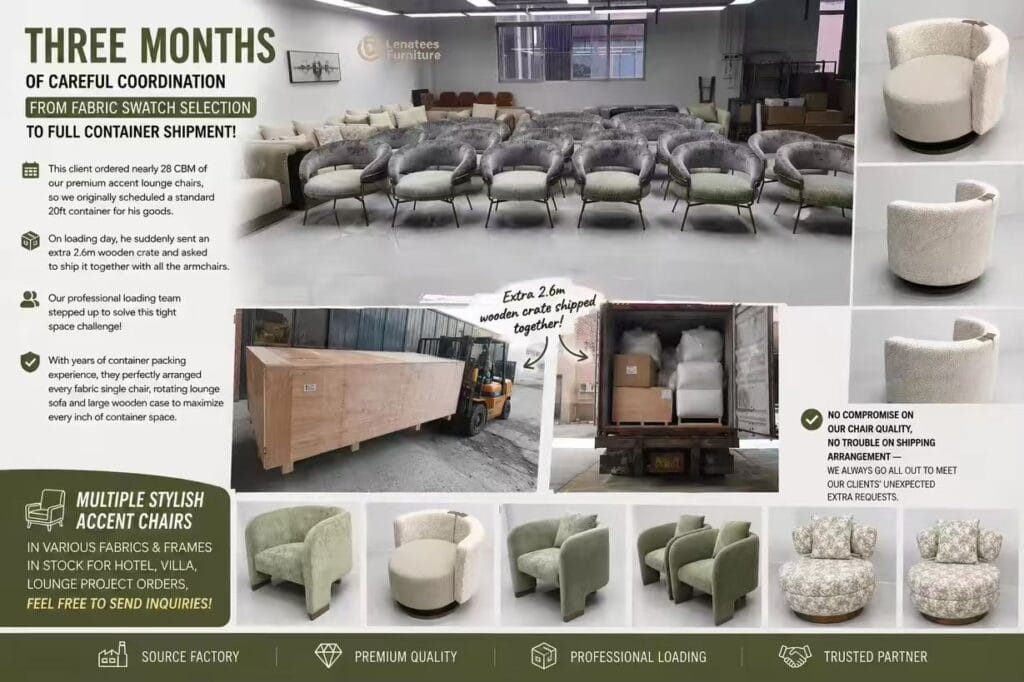
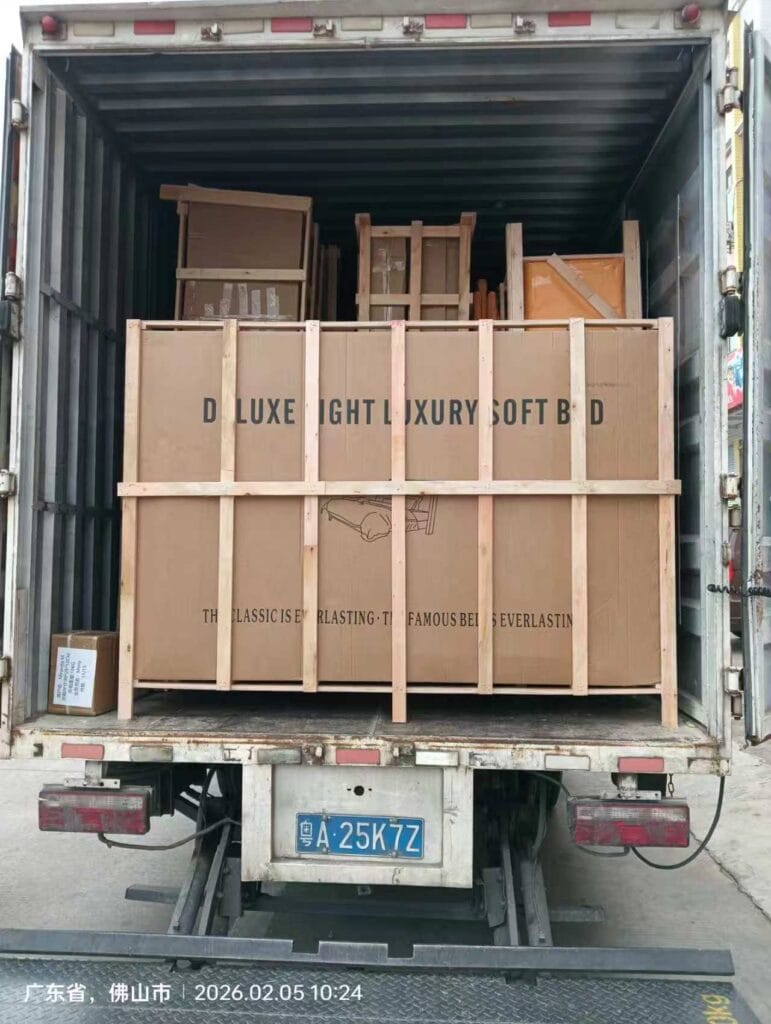
First-party packing and loading records illustrate the final handover points that a procurement schedule must control.
PROJECT REVIEW
Need a more comparable hotel furniture quotation?
Send Lenatees your BOQ, drawings, room types, destination and target date. We can review the package before pricing and coordinate the relevant hotel project references.
Sources and limits
- U.S. Access Board, ADA Standards: Special Rooms, Spaces and Elements. Requirements vary by project and jurisdiction; consult the qualified project team.
- ISO, ISO 9001 explained.
- U.S. Customs and Border Protection, importer and customs broker guidance.