





PROJECT FURNITURE PROCUREMENT / 2026
A data-backed guide to selecting modular seating, easy-care upholstery, coordinated casegoods and outdoor furniture for commercial projects.
Furniture buyers are not only asking what looks fashionable. For hotels, villas, apartments and mixed-use developments, the more useful questions are practical:
- Can the layout change when the room use changes?
- Will the upholstery survive frequent use and cleaning?
- Can dimensions, finishes and hardware be coordinated across a project?
- How easy will the furniture be to maintain, repair or replace?
- Can the supplier control the schedule as well as the appearance?
Recent consumer research and trade-market reporting point to four furniture categories receiving particular attention: modular upholstered seating, durable easy-care furniture, coordinated casegoods and outdoor lounge or dining furniture. The same evidence also shows why project buyers should evaluate lifecycle performance, not only unit price.
1. Modular sofas and flexible seating
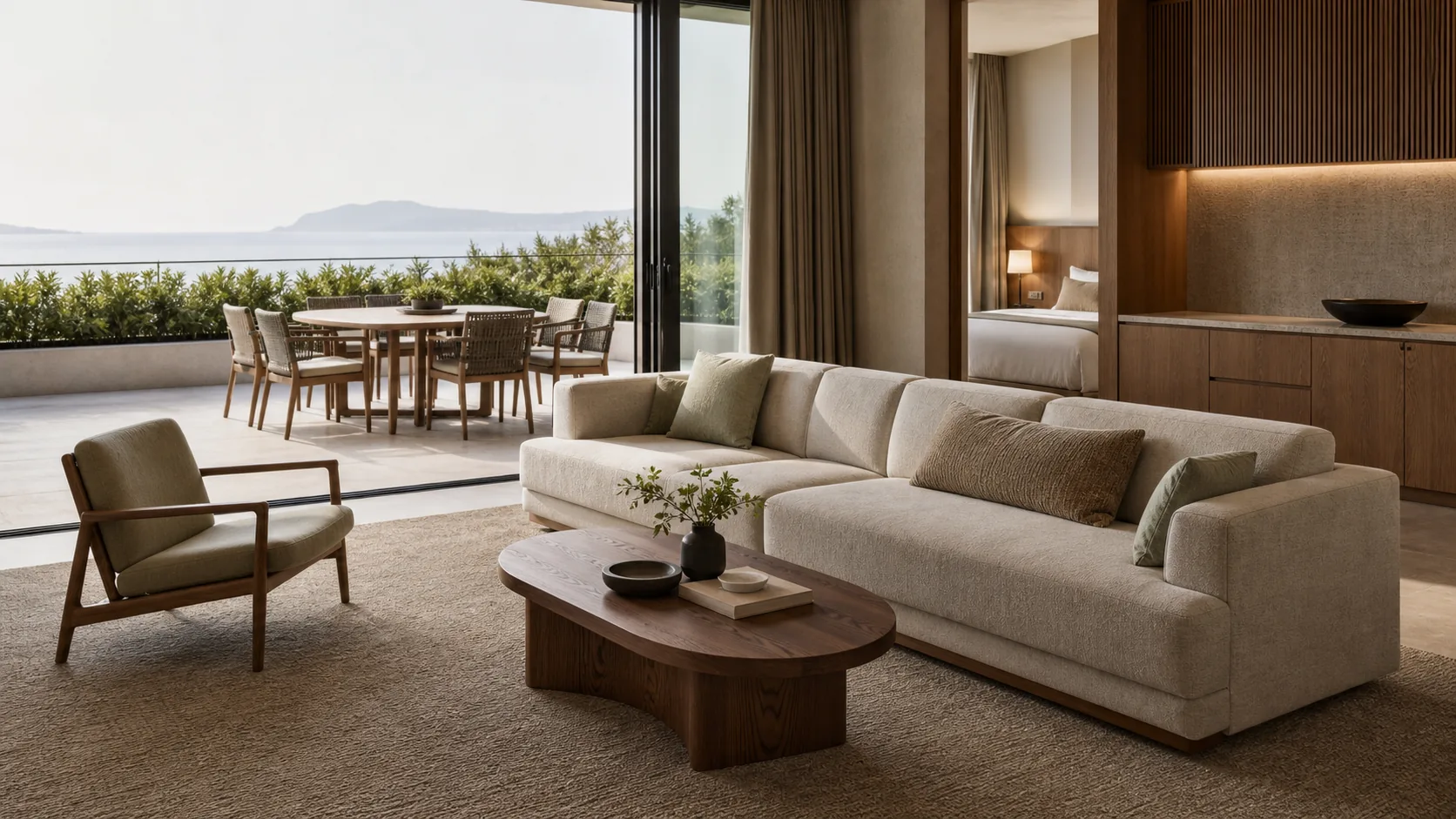
Modular sofas are increasingly relevant because one product family can support several layouts. A sectional can be configured for a hotel lobby, apartment living room, villa lounge or serviced-residence common area without developing a completely unrelated model for every space.
The interest is measurable. A 2025 Furniture Today and Strategic Insights survey found that 40% of prospective upholstered-furniture buyers considered customization extremely or very important. Among people considering a sectional, 75% said they would consider a custom order. Furniture Today reported the survey findings here.
Trade-market observations reinforce that direction. At the 2025 spring High Point Market, Houzz reported continuing demand for personalized pieces and a wide selection of multipurpose, flexible furniture, including modular sofas that can be combined in different configurations. See Houzz's 2025 furniture trend review.
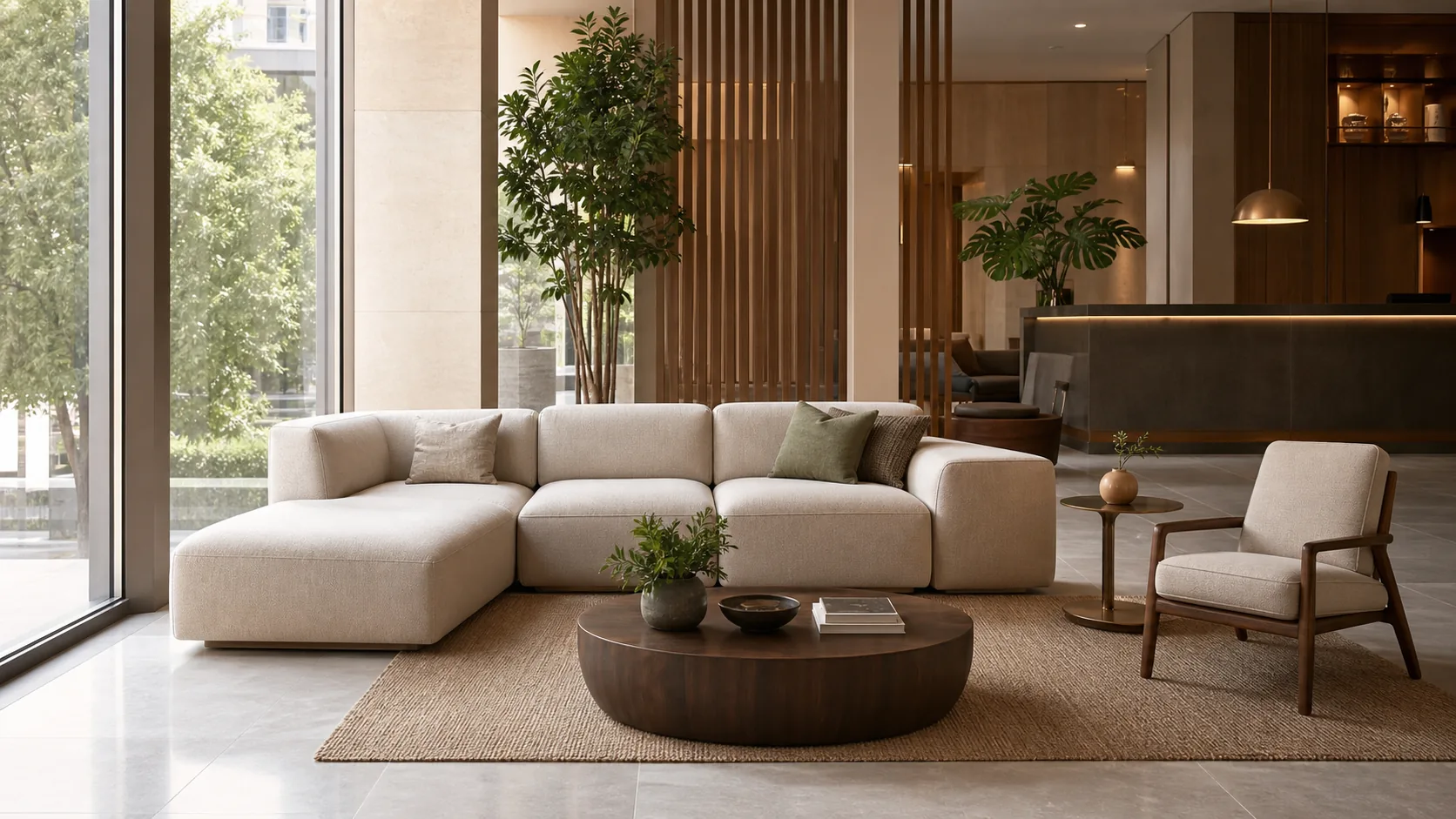
For a project buyer, however, “modular” should mean more than movable sections. A useful specification should confirm:
- module dimensions and the complete layout drawing;
- connector type and resistance to modules drifting apart;
- seat height, depth and cushion firmness;
- frame, suspension, foam density and upholstery construction;
- fabric performance and cleaning method;
- replacement availability for covers, cushions and connectors;
- labeling and packing by room, floor or area.
Browse Lenatees living room furniture and modular sofa options when preparing a seating schedule.
2. Easy-care lounge, dining and guest-room seating
Comfort remains important, but the recent shift is toward comfort that is easier to operate. Houzz's High Point Market review described generous, supportive seating with softer curves, while also noting strong activity in attractive, easy-care upholstery and performance materials.
This matters even more in commercial environments. A residential sofa may be used by the same family, but hospitality furniture faces different users, luggage contact, food and drink spills, frequent housekeeping and repeated movement. The visual reference alone cannot confirm whether the construction suits that workload.
Project teams should ask the following questions before approving a lounge chair, dining chair, sofa or banquette:
- What is the intended use level? Define whether the item is for a guest room, lobby, restaurant, corridor waiting area or private villa.
- How is it cleaned? Request the fabric supplier's cleaning instructions and check whether the selected finish tolerates the planned housekeeping chemicals.
- What can be replaced? Removable seat cushions, covers, glides and hardware may reduce downtime and lifecycle cost.
- Which tests are required? The buyer should specify applicable fire, strength, stability, abrasion or chemical requirements for the destination market and project.
- What is the approved reference? Color, texture, comfort and workmanship should be controlled through written specifications and approved physical samples.
The result is not necessarily a heavier-looking product. It is furniture whose hidden construction and maintenance plan match the setting in which it will operate.
3. Coordinated casegoods for hotel rooms and apartments
Casegoods include headboards, nightstands, desks, wardrobes, minibars, luggage benches, TV units and other hard-surface furniture. These items receive less attention in trend headlines than sofas, yet they often create the largest coordination burden in a hotel or apartment package.
The broader renovation data explains why control matters. In the 2025 U.S. Houzz & Home Study, 33% of renovating homeowners cited finding the right service providers as a challenge. Sourcing the right products was cited by 27%, staying on budget by 26% and staying on schedule by 19%. The complete Houzz study is available as a PDF.
Those percentages describe residential renovation, but the four risks are familiar to professional procurement teams as well: supplier capability, product suitability, cost and timing. Coordinated casegoods reduce ambiguity only when every item is connected to the same document set.
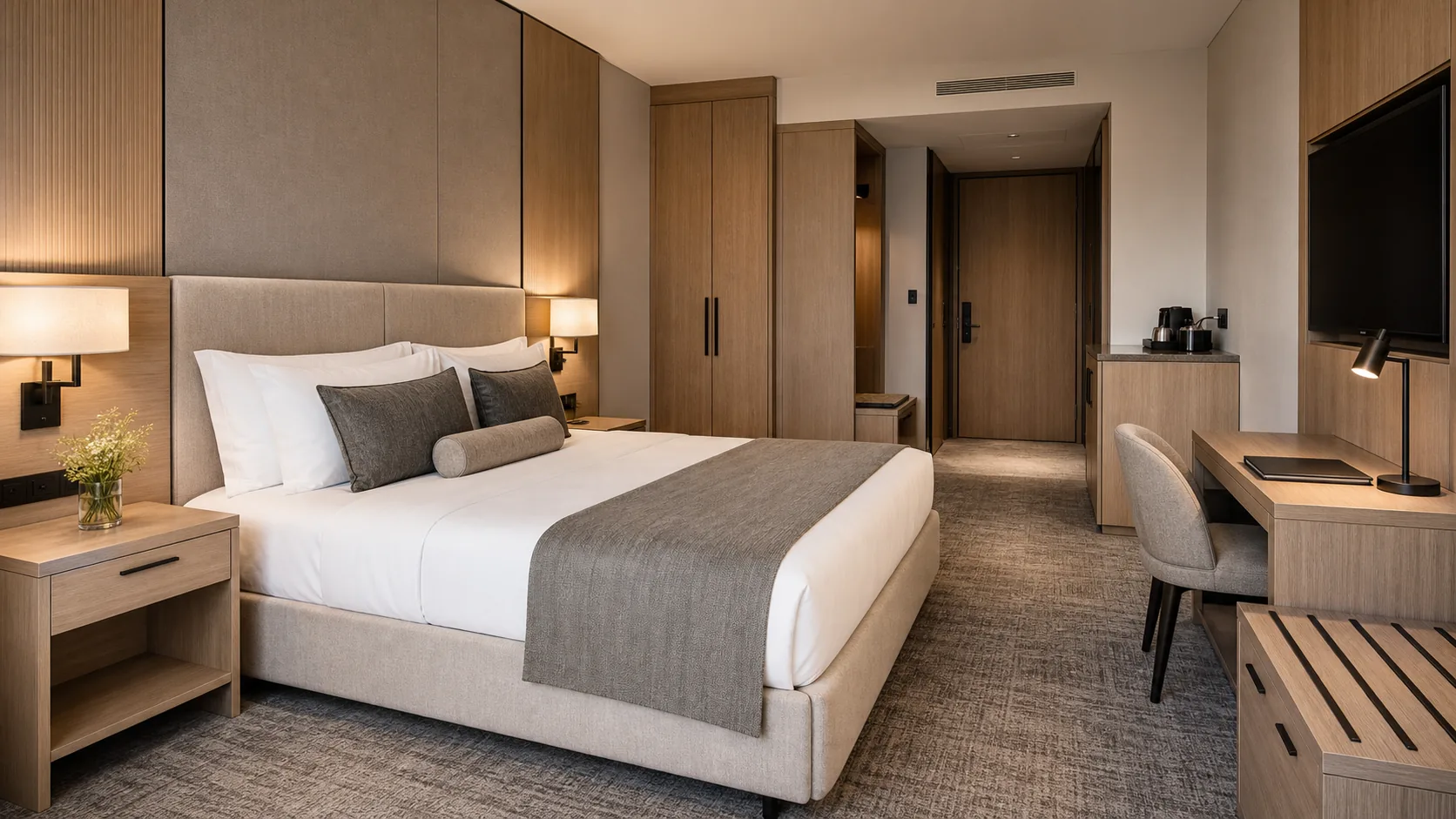
A casegoods request for quotation should include:
- room types, quantities and furniture codes;
- plans, elevations, sections and key dimensions;
- substrate, veneer, laminate, solid wood, metal, stone and glass requirements;
- stain, paint, sheen and approved finish references;
- hinges, runners, locks, handles and power/data interfaces;
- destination-market testing and labeling requirements;
- mock-up or sample-room approval criteria;
- room/floor labeling, packing-list format and shipment phases.
Use the Lenatees hotel casegoods specification guide to organize these inputs before pricing.
4. Outdoor lounge and dining furniture
Outdoor furniture is one of the clearest data-backed opportunities. The International Casual Furnishings Association's 2025 survey found that 59% of households with outdoor space planned to purchase outdoor furniture or accessories during the year. Eighty percent had at least one item on a wish list; leading items included lounge chairs, dining tables and chairs, benches, porch swings and sofas.
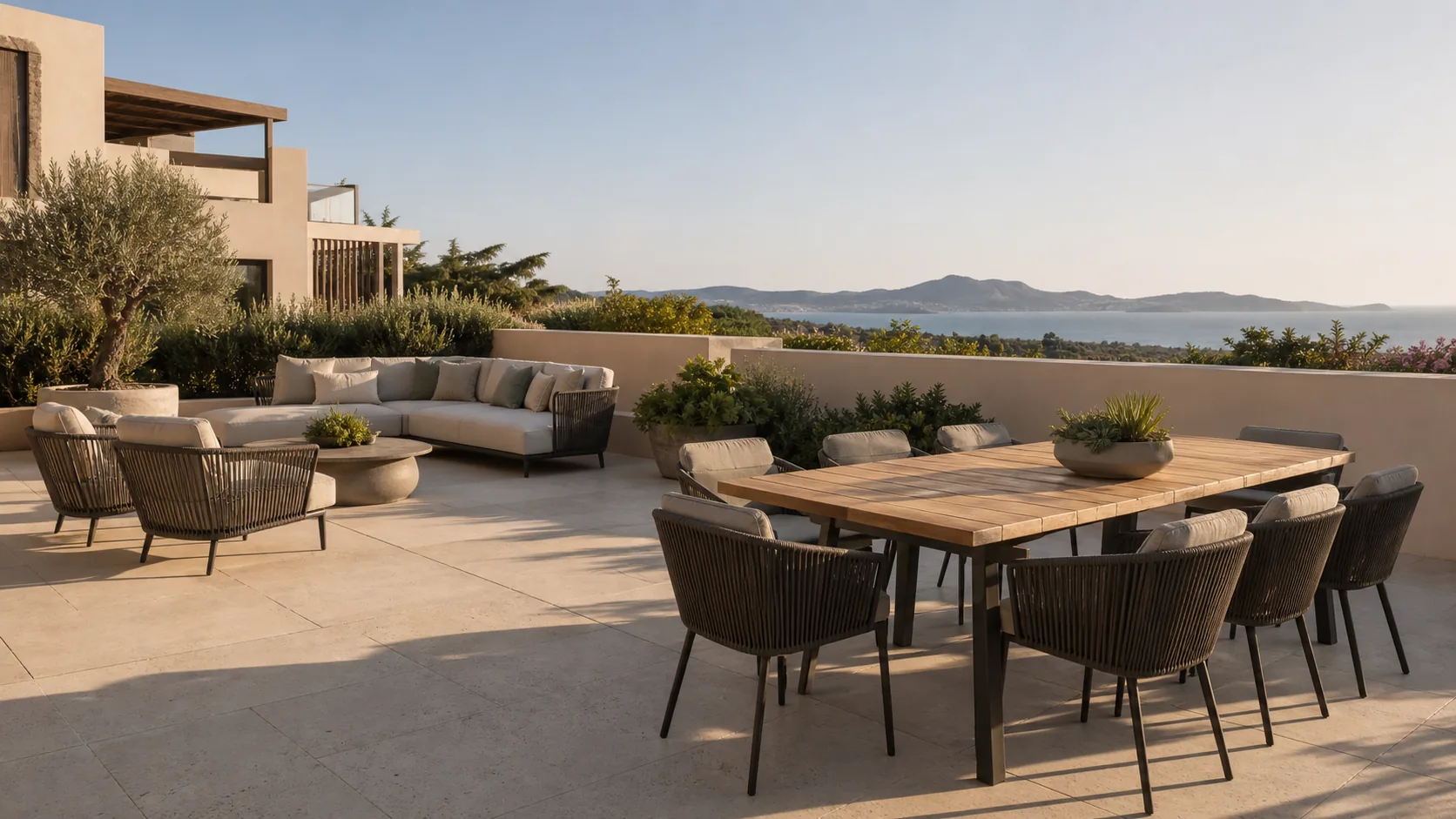
The same study reveals what buyers worry about. Sixty-seven percent prioritized practicality and durability over style. Aside from price, the largest barriers were cleaning and care, cited by 42%, and uncertainty about what to buy, cited by 34%. Review the ICFA 2025 Outdoor Living Trend Report.
For hotels, resorts, villas and rooftop projects, these findings suggest that a convincing outdoor proposal needs more than an attractive rendering. Buyers should compare:
- frame material and corrosion protection;
- drainage and cushion drying details;
- UV, moisture and stain performance of fabrics;
- replaceable covers and component availability;
- wind, stability and anchoring considerations where applicable;
- protection during storage and seasonal shutdown;
- maintenance instructions for the local climate.
In hot, humid, coastal or high-UV destinations, materials should be selected for the actual exposure instead of being described simply as “outdoor grade.”
Which category should your project prioritize?
The right answer depends on the operating model, not just the design style.
| Project type | Furniture types to prioritize | Main specification focus |
|---|---|---|
| Hotel guest rooms | Beds, headboards, nightstands, desks, wardrobes and luggage benches | Room schedule, dimensions, interfaces, durability and room-by-room packing |
| Hotel lobby or lounge | Modular sofas, lounge chairs and occasional tables | Flexible layouts, upholstery performance, comfort and replaceable components |
| Restaurant or café | Dining chairs, tables, banquettes and bar seating | Stability, cleanability, seat comfort, floor glides and maintenance |
| Villa or luxury residence | Coordinated bedroom, living and dining furniture | Custom dimensions, finish consistency, comfort and visual detailing |
| Serviced apartment | Modular seating, storage beds, dining sets and casegoods | Space efficiency, repeatability, storage and replacement planning |
| Resort or outdoor area | Lounge chairs, sofas, dining sets, benches and side tables | UV/moisture resistance, drainage, corrosion control and easy care |
A practical rule: specify performance before requesting the final price
The data does not point to one universal “best” furniture type. It points to a common buying pattern: customers want more choice and flexibility, but they also need durability, maintenance clarity and reliable project execution.
Before asking suppliers to compete on price, issue the same information to each of them:
- BOQ and quantities;
- drawings or dimensional references;
- project location and intended application;
- materials and finish direction;
- required tests or standards;
- mock-up expectations;
- target delivery milestones;
- packing, labeling and installation responsibilities.
Without a common specification, two quotations may describe visibly similar products but very different construction, testing, packaging and service scopes.
Frequently asked questions
Are modular sofas suitable for hotel lobbies?
Yes, when the modules, connectors, upholstery and maintenance plan are specified for commercial use. The buyer should approve both the individual modules and the complete layout.
What furniture is normally included in a hotel guest-room package?
A typical scope may include a bed or bed base, headboard, nightstands, desk, chair, wardrobe, minibar unit, luggage bench, TV unit and selected lounge seating. The exact package should follow the room schedule and operator requirements.
Is custom furniture always more expensive than standard furniture?
Not necessarily. Cost depends on quantity, materials, tooling, construction, finish complexity and testing. Customization can also reduce site problems when it resolves dimensions, interfaces and room-specific requirements before production.
What should buyers check for outdoor furniture?
Check the frame, coatings, fasteners, fabric, foam, drainage, UV exposure, corrosion risk, cleaning instructions and availability of replacement components. Requirements should reflect the destination climate.
What information is needed for an accurate project quotation?
Send the project location, furniture list, quantities, drawings, dimensions, materials, finishes, standards, destination and target schedule. For hospitality work, include room types and the BOQ whenever available.
PROJECT CONSULTATION
Planning a furniture project?
Lenatees supports custom furniture programs for hotels, villas, apartments, restaurants and other commercial spaces. Review our custom hotel furniture project capabilities or send your project information, including the location, furniture scope, quantities, drawings or BOQ, destination and required timeline.
Data sources
- Furniture Today / Strategic Insights, “Fewer consumers customize when buying upholstered furniture,” February 10, 2025: https://www.furnituretoday.com/research-and-analysis/fewer-consumers-customize-when-buying-upholstered-furniture/
- Houzz, “8 Furniture Trends to Know in 2025,” May 3, 2025: https://www.houzz.com/magazine/8-furniture-trends-to-know-in-2025-stsetivw-vs~181429728
- Houzz Research, “2025 U.S. Houzz & Home Study”: https://st.hzcdn.com/static/econ/2025-US-Houzz-and-Home.pdf
- International Casual Furnishings Association, “2025 Outdoor Living Trend Report,” March 24, 2025: https://www.icfanet.org/news/2025_trend_report/
Editorial note: Survey findings describe the populations and markets covered by each source. They are directional evidence for product planning, not a forecast of demand for every country or project.