



Home > News > Industry News
How to Specify a Cashew-Shaped Curved Sofa
2025-08-12
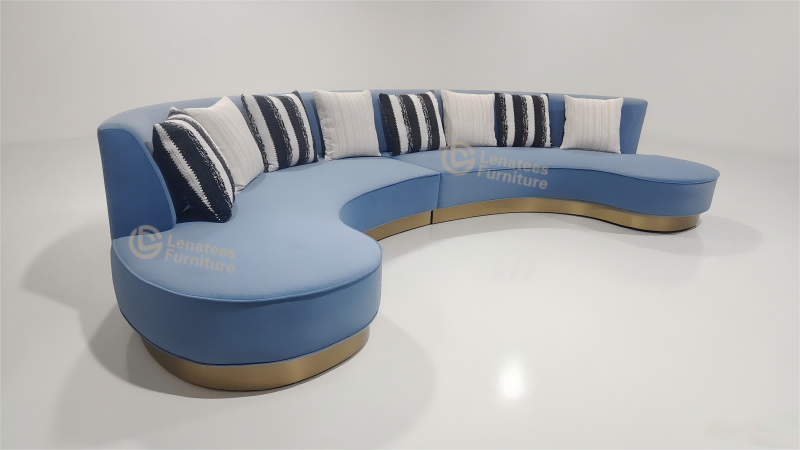
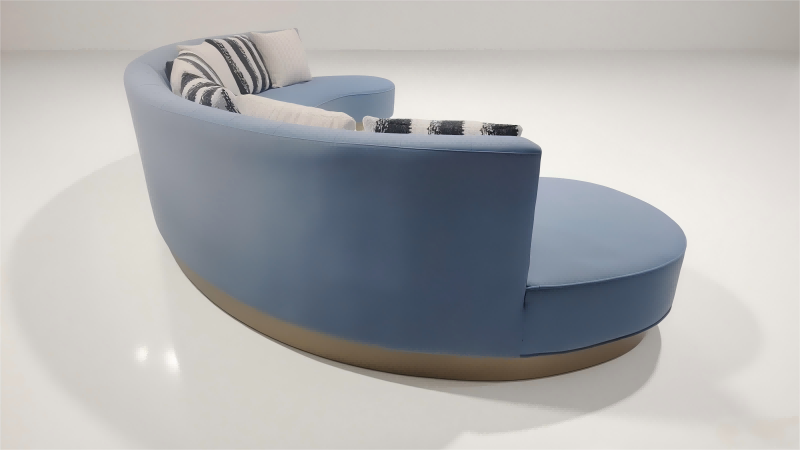
The photograph shows a blue, curved multi-seat sofa with a gold-tone plinth and striped cushions. On this cashew-shaped sofa the deepest part of the curve may sit beside, rather than behind, the person using it. A catalogue width and depth can tell you whether the piece fits the room without telling you whether it is comfortable to sit in. Here is how to brief the maker and check a sample of this curved, upholstered design.
Mark the sitting position on the plan
Print the plan view and put a dot where you expect a person to sit. Draw a line from the inside face of the back cushion through the dot to the front edge. That is the useful seat depth at that position. Mark a second point near the tighter end of the curve and measure again. Put both figures next to the overall footprint, keeping the cushions in their intended position. For the measurement method, see how to measure usable seat depth.
Face the profile the way it will sit in the room. For the inside curve shown here, place the proposed coffee table on the same plan. A person in the centre needs room to get out once the end positions are occupied. Put chairs or boxes along the marked curve and try the route. If the opening is too tight, compare a smaller table or a different orientation before changing the sofa footprint.
Review the curve in the actual covering
Ask for a close-up of the inside curve, a side view of the front edge and a view of the seam underneath. A flat swatch shows the colour, but not where a piping line wanders or a patterned fabric changes direction around the bend. Mark the seam you accept on a photograph. If the quote changes the covering, review that curve again in the replacement fabric.
What to record when you sit on the sample
Try the centre and the narrower end, then stand up from each. Note where the edge supports the thighs and whether the cushion shifts relative to the exposed base. Take a photo of the cushion after getting up and identify which filling was in the sample. Keep the drawing, fabric reference, base finish and sample photo together; a supplier can then quote the approved version or identify exactly what would change.