





Meaning · Pronunciation · History · Visual guide
What Is Chinoiserie?
Quick answer: Chinoiserie is a European and American decorative style shaped by Western interpretations of China and by imported Asian objects. It became especially influential in the 17th and 18th centuries, appearing in furniture, wallpaper, porcelain, textiles, interiors and gardens.
Pronunciation: sheen-WAHZ-reeOne readable approximation; dictionaries record more than one pronunciation.Listen to dictionary recordings
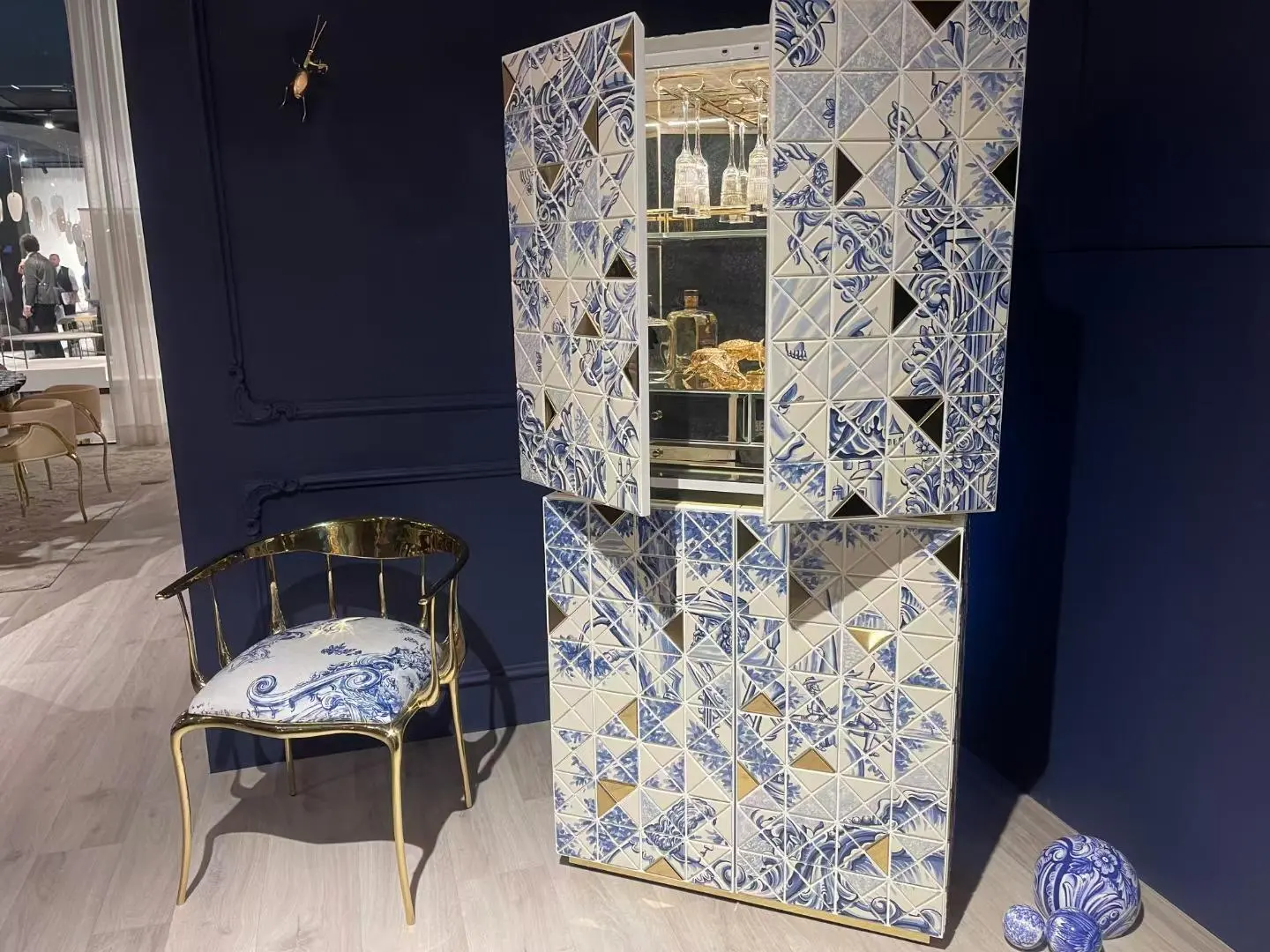
Definition and meaning
Chinoiserie describes a Western interpretation
The word is useful when it identifies a documented design category. It becomes misleading when it is used as a loose label for anything Chinese, East Asian or blue and white.
What does Chinoiserie mean?
Chinoiserie is not a traditional Chinese design style. It is a European and American decorative tradition shaped by imported Asian objects, travel accounts and imaginative interpretations of China. Historical designers often blended Chinese, Japanese and other Asian references rather than reproducing one culture precisely.
The term comes through French chinois, meaning Chinese. Merriam-Webster records 1846 as the first known English use of the word, but the decorative phenomenon itself is much older. That dictionary date should not be treated as the beginning of the style.
Historical timeline
How the style developed
Select a period to see what changed. The dates below describe documented developments; they are not a claim that one event created the style everywhere at once.
Asian luxury goods reach European markets
Porcelain, silk and lacquerware arriving through trade introduced European patrons and makers to unfamiliar materials, surfaces and imagery. These objects were collected, displayed and imitated. This exchange provided important conditions for Chinoiserie, although it would be inaccurate to say the fully formed style already existed in the early 1500s.
Imports, imitation and imagination converge
Chinese hand-painted wallpapers were sold in London by the late 17th century. European workshops also developed painted and varnished imitations of East Asian lacquer, commonly called japanning. Designers assembled scenes from imported objects, pattern books and second-hand accounts, often mixing cultural sources.
Pattern books help popularize Chinoiserie design
William Halfpenny published Chinese-inspired architectural designs in 1750. Thomas Chippendale’s 1754 design book included furniture in a Chinese taste, and William Chambers published Designs of Chinese Buildings in 1757. These dated publications document how the taste circulated in mid-18th-century Britain; they should not be read as a universal peak for every country.
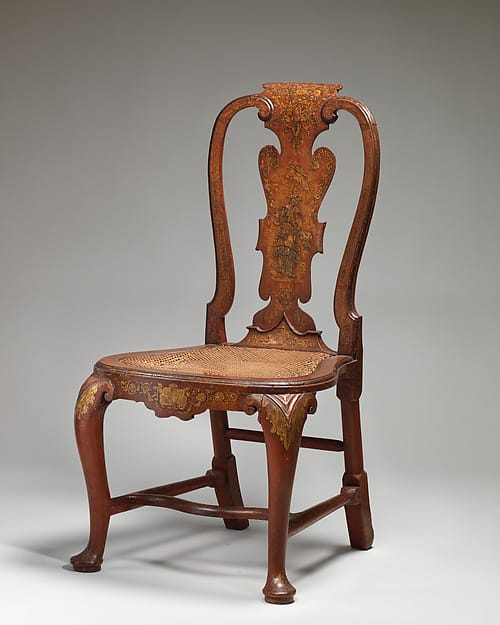
Object example: Giles Grendey, side chair, ca. 1735–40, made in Britain from lacquered and gilded beech with caning. The Metropolitan Museum of Art, Public Domain. It demonstrates European furniture using lacquer-like decoration; it is not Chinese-made furniture.
View the object record
The style continues through revivals
Chinoiserie did not vanish after the 18th century. It reappeared in different historicist, decorative and popular contexts. Because later revivals often reused earlier visual shorthand, the presence of a pagoda, dragon or lacquer-like surface cannot by itself date a piece.
A historical label becomes a design reference
Today, designers may work with archival imagery, restrained botanical panels, lacquer-like finishes or geometric fretwork without reproducing a historical room. A responsible contemporary brief distinguishes the source of the reference, the designer’s new interpretation and the production technique.
For new furniture, “Chinoiserie-inspired” is often clearer than implying a historical object or an authentic Chinese tradition.
Documented museum examples
Four objects show how the style crossed media and countries
Each example below links to a museum catalogue record and uses an image marked Public Domain by The Metropolitan Museum of Art. The captions separate maker, place, date and material from later style labels.
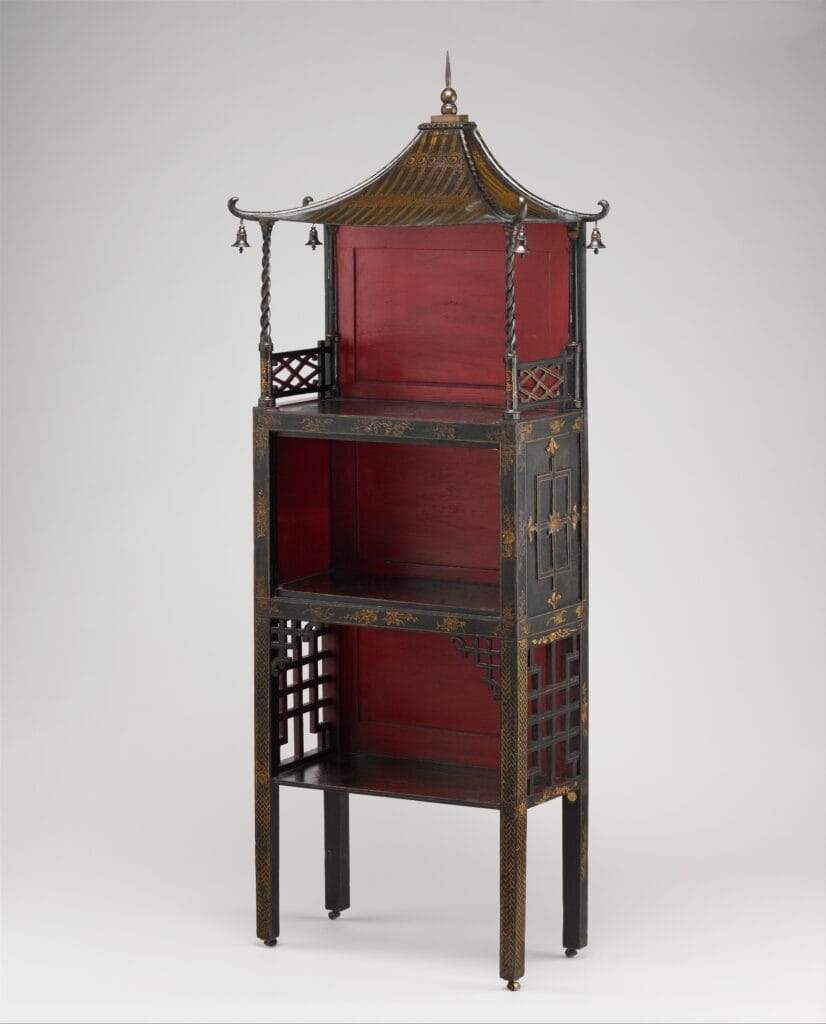
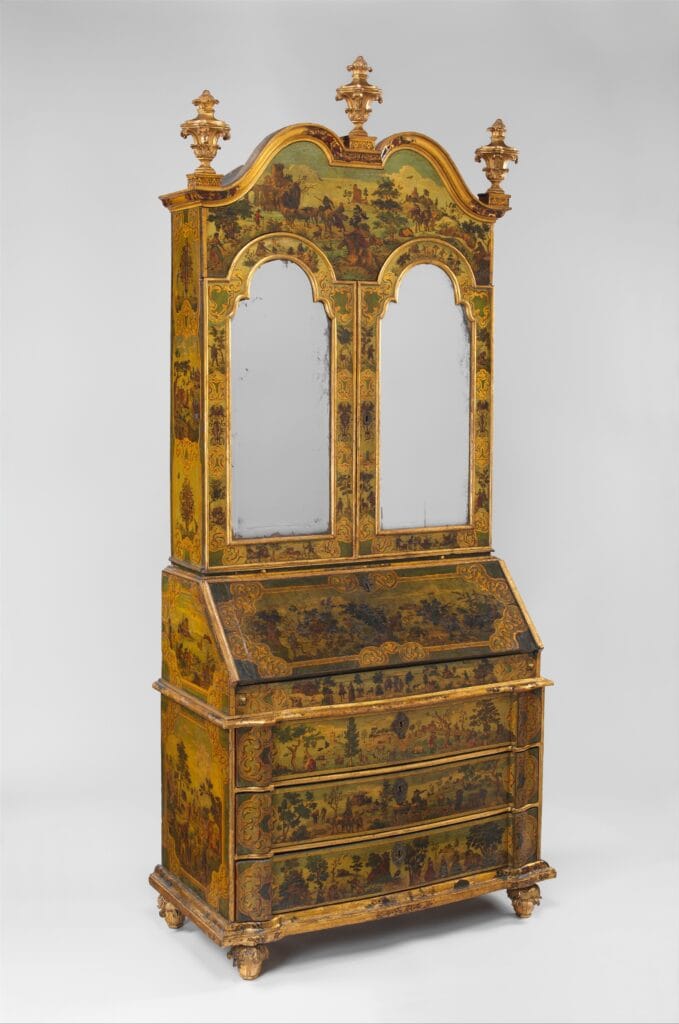
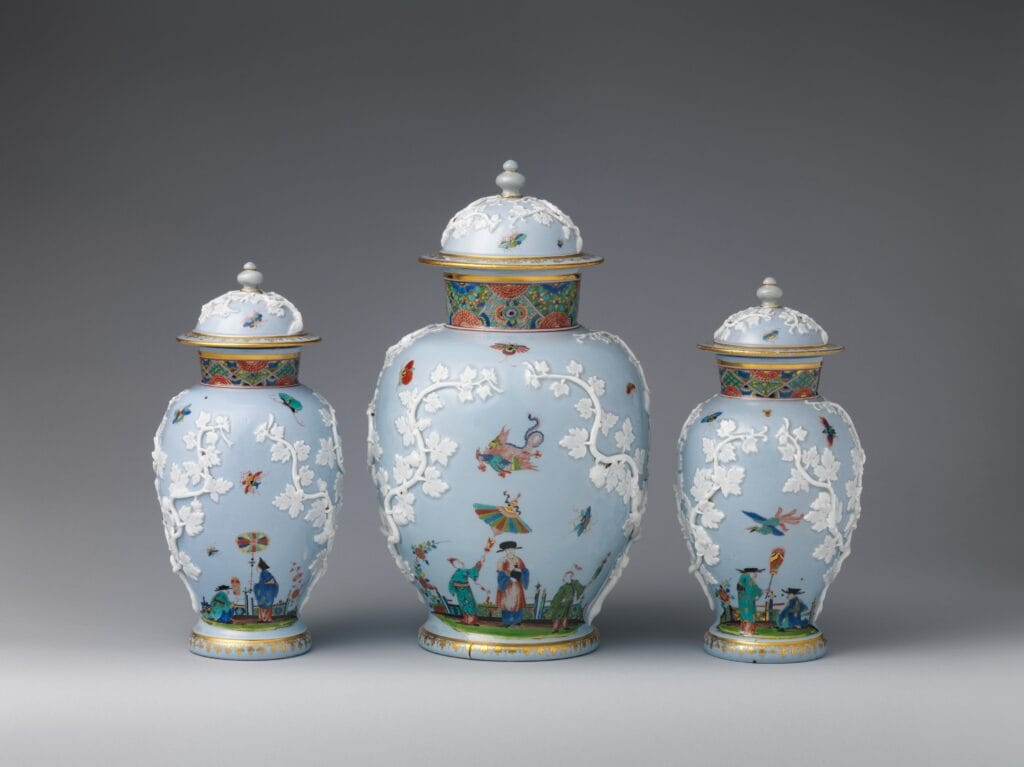
Reading rule: a museum label documents one object; it does not turn a motif into a universal authentication test. Use maker, date, place, medium and provenance together.
Interactive motif explorer
What does Chinoiserie look like?
These features are recurring clues, not a rigid checklist. Select a visual family to see how it tends to appear and what not to assume.
Pagodas and imagined pavilions
Tiered roofs, fanciful bridges, pavilions and garden structures supplied an instantly recognizable “Chinese” setting for European audiences. These scenes were usually composed through a Western decorative lens rather than recorded as architectural surveys.
Birds, flowers and garden imagery
Peonies, flowering branches, exotic birds, insects and ornamental gardens frequently appear in Chinoiserie compositions. Some examples respond closely to imported Chinese export objects; others freely rearrange elements for a European interior.
Landscapes, figures and invented narratives
Figures in robes, boats, rocky landscapes and everyday-looking activities often form decorative narratives. V&A research shows that makers borrowed, adapted and combined visual material, so a scene may reflect several sources rather than one accurate location or custom.
Dragons and mythical animals
Dragons and other fanciful creatures could appear alongside clouds, foliage and architectural motifs. Their forms were often filtered through imported wares and European pattern books, so they should not automatically be read as precise Chinese symbols.
Lacquer-like surfaces, japanning and gilding
European makers tried to imitate admired East Asian lacquer using locally available or imported resins and varnishes. The European imitation process is commonly called japanning. It should not be described as the same material tradition as Chinese or Japanese natural lacquer.
Geometric fretwork and “Chinese taste” furniture
18th-century British design books helped popularize pierced rails, lattice-like details and chair backs described at the time as being in a Chinese taste. Today these forms are often grouped with Chinese Chippendale furniture, which is related to Chinoiserie but not identical to all Chinoiserie design.
Motif and furniture history: V&A introduction; lacquer terminology: V&A lacquer research.
Observation, not authentication
Which Chinoiserie-related features can you observe?
Use this editorial checklist to record what is visible before looking for labels, maker records, construction details and provenance.
Start with a cluster of evidence
No single colour, creature or finish defines the style. A stronger identification combines the object’s date and place with multiple visual features and a documented design context.
For an antique or valuable object, consult a qualified curator, conservator, appraiser or specialist. This page cannot authenticate, date or value an object.
Visual observation checklist
Select only features you can actually observe. The tool records features; it does not calculate identity or authenticity.
Select any visible features to create an observation note for further research.
Lenatees editorial observation checklist—not a museum, authentication or appraisal methodology. There is no score or threshold. Selected features never prove age, origin, maker, authenticity or market value.
Terminology comparison
What Chinoiserie is—and what it is not
These terms overlap in museum catalogues, antiques and modern retail, but they describe different histories. Use the narrowest accurate label supported by evidence.
Chinoiserie
A Western interpretation of China and other Asian sources, often imaginative and adapted to European or American decorative forms.
- Best identified through context plus a cluster of motifs
- Can appear across furniture, wallpaper, ceramics and interiors
- Does not prove Chinese manufacture
Traditional Chinese furniture
Furniture made within Chinese cultural, regional and historical traditions, with its own forms, materials, functions and construction methods.
- Should be described by period, region, maker or object type where known
- Ming and Qing hardwood furniture is one important area—not the whole category
- Not interchangeable with Chinoiserie
Chinese Chippendale
A Western 18th-century furniture and architectural taste associated with design books, geometric fretwork and Chinese-inspired ornament.
- Related to the broader history of Chinoiserie
- Useful for specific lattice and furniture forms
- Not a label for Chinese cabinetmaking in general
Why the distinction matters: terminology affects cataloguing, sourcing, restoration and new design briefs. If the evidence is uncertain, “Chinoiserie-inspired” or “Chinese-inspired Western decorative design” is often safer than making a claim about origin.
Media and interiors
Where does Chinoiserie appear?
The style is not confined to cabinets or blue-and-white rooms. Its visual language moved between objects, surfaces, architecture and gardens.
Contemporary interpretation
From visual reference to a buildable furniture brief
A modern project should translate the desired atmosphere into explicit design decisions instead of asking a supplier to “make it Chinoiserie.”
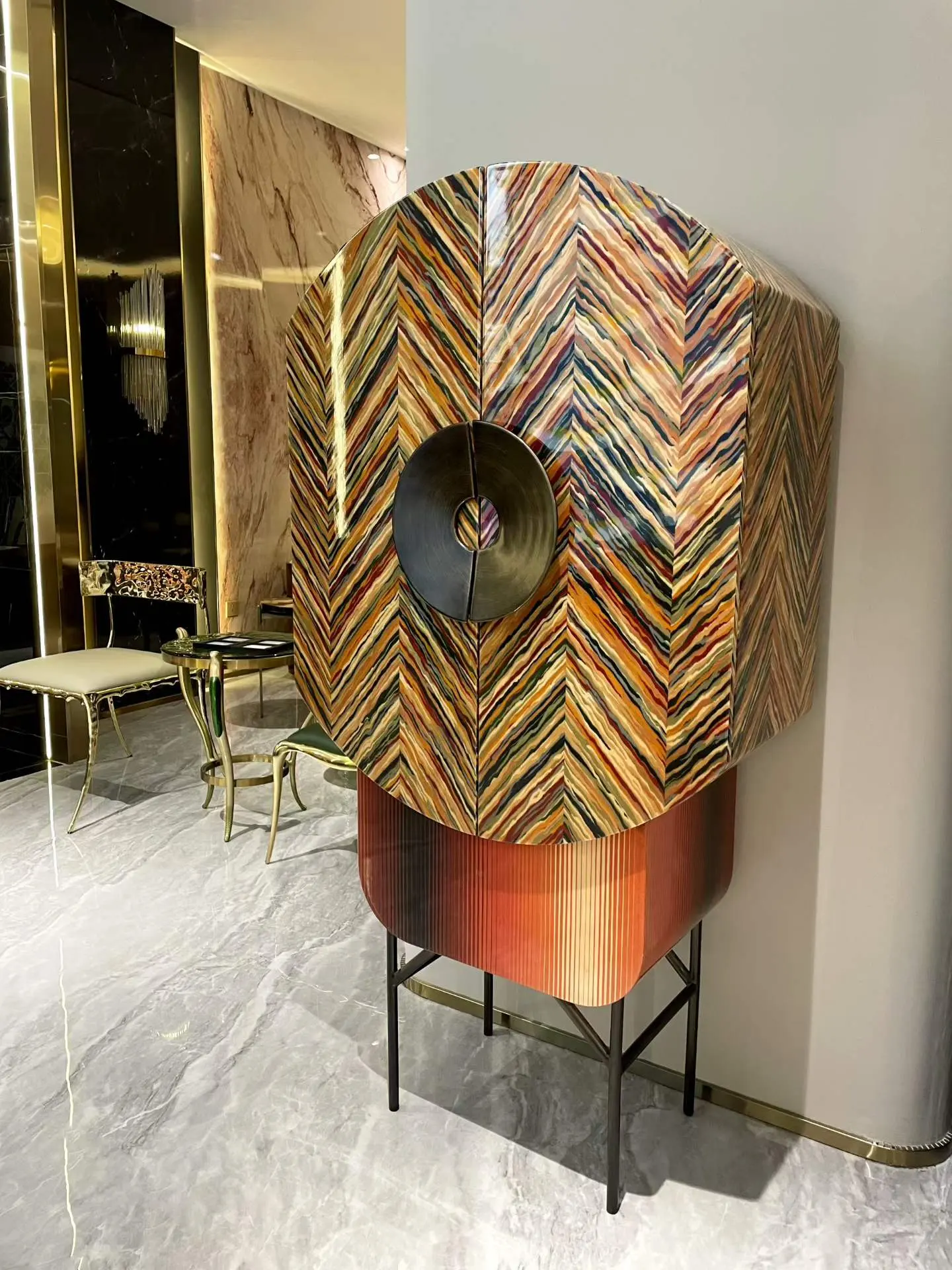
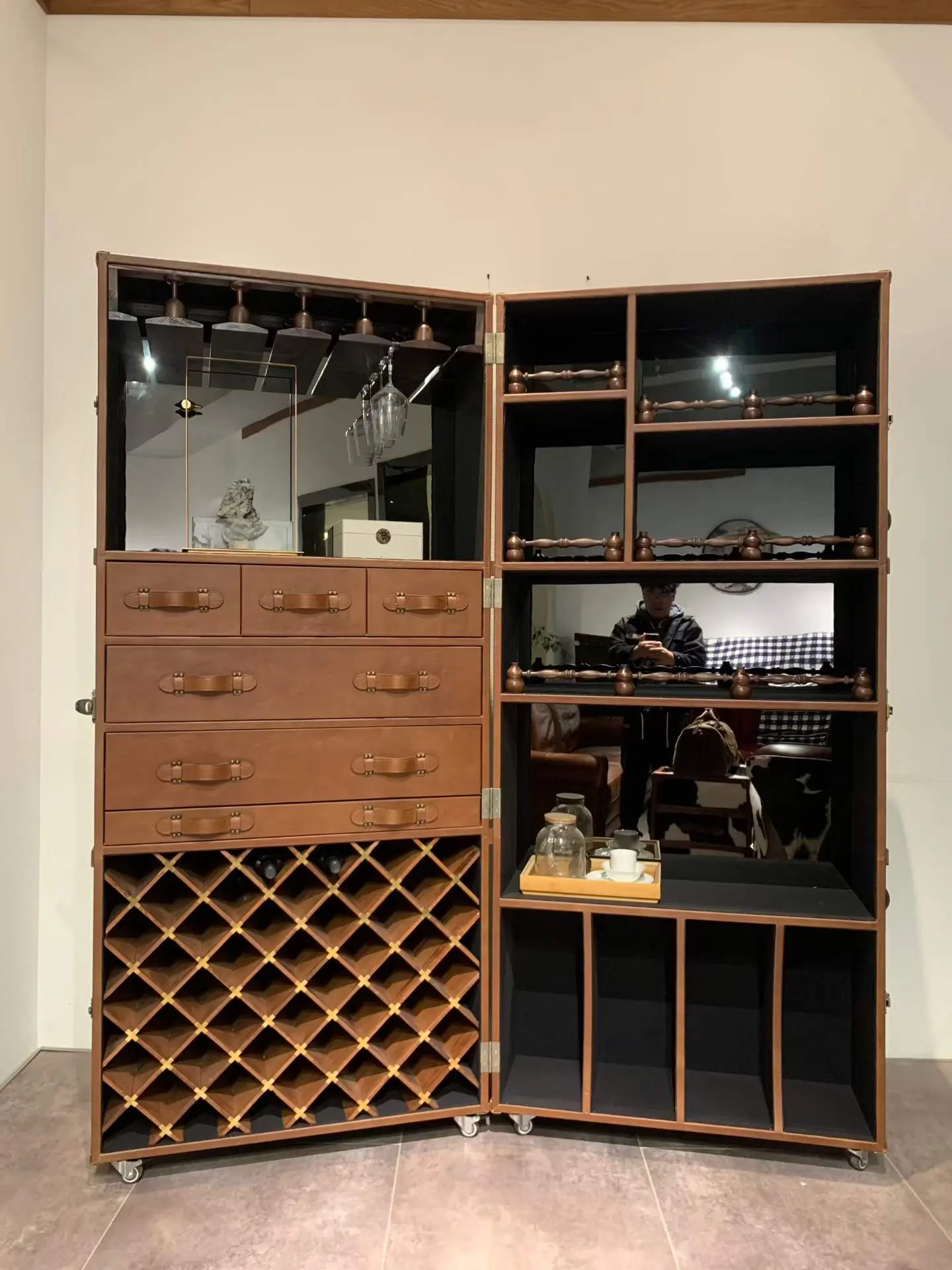
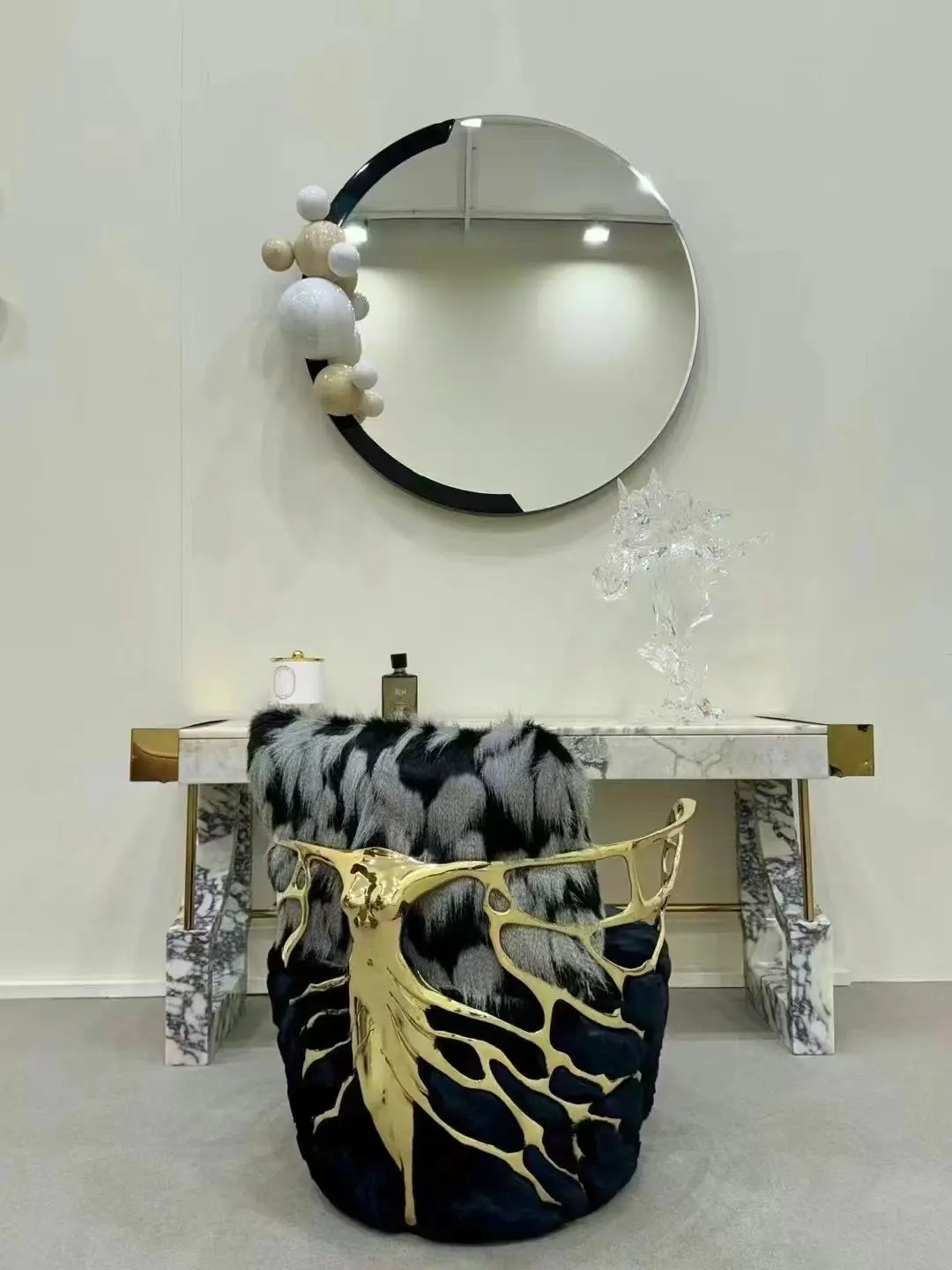
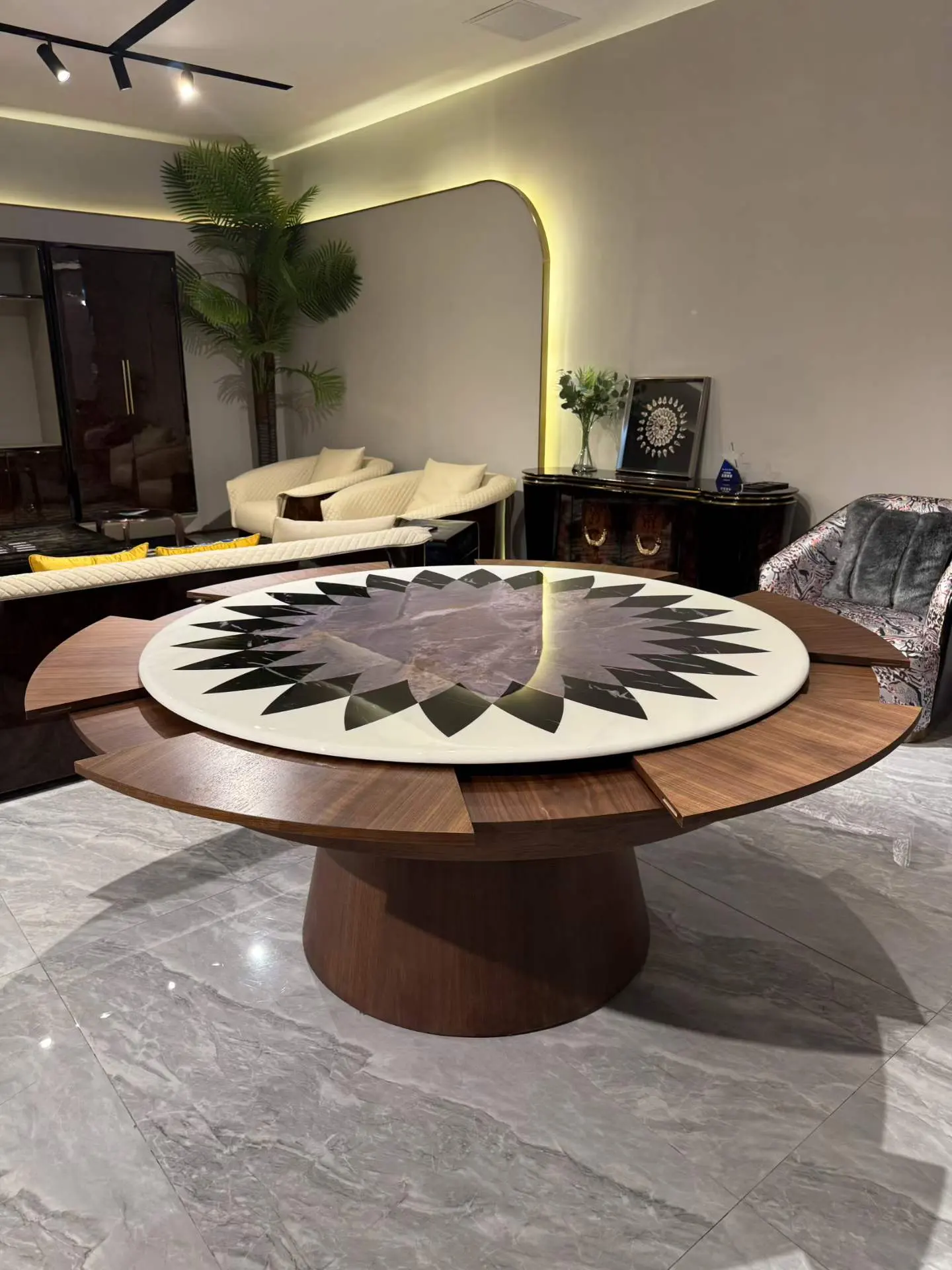
Five decisions make the reference actionable
For a new piece, begin with the object’s purpose and constraints. Historical language can guide the visual direction, but drawings and samples must control production.
Reference source: identify the object, artwork or mood being interpreted and confirm rights to use protected work.
Motif and placement: define the approved artwork, scale, crop, orientation and panel boundaries.
Form and substrate: resolve dimensions, structure, doors, drawers and the surface receiving decoration.
Colour and sheen: approve physical control samples rather than relying only on screen images.
Technique and variation: state whether variation is acceptable and how the sample becomes the production standard.
Planning a new piece or project collection?
The commercial page covers drawings, sampling, finish controls and production questions without changing the historical meaning explained here.
See custom Chinoiserie furniture developmentCultural context
Describe the source tradition honestly
Chinoiserie can be studied as evidence of global trade, collecting and cross-cultural design. It also developed through incomplete knowledge and sometimes stereotyped fantasy. Both parts of that history matter.
Rather than treating every object as a generic “Oriental” design, identify the maker, place, date, medium and source tradition wherever evidence allows. Separate a Chinese export object, a European imitation and a present-day reinterpretation.
Frequently asked questions
Common questions about Chinoiserie
How do you pronounce Chinoiserie?
A readable English approximation is “sheen-WAHZ-ree.” Merriam-Webster records more than one pronunciation, so this should be treated as a helpful guide rather than the only correct form.
What does Chinoiserie mean?
Chinoiserie is a European and American decorative style shaped by Western interpretations of China and imported Asian objects. The term comes through French chinois, meaning Chinese.
Did Chinoiserie originate in China?
No. Chinoiserie is a Western decorative category. It was influenced by Asian imported objects and ideas about China, but historical works often mixed Chinese, Japanese and other Asian references.
Is Chinoiserie decor made in China?
Not necessarily. A historical Chinoiserie object may have been made in Europe or America. Chinese export objects also influenced the style, so origin must be established from the individual object’s documentation rather than its motifs alone.
Is Chinoiserie always blue and white?
No. Blue and white is one familiar direction associated with porcelain, but Chinoiserie also appears in red, black, green, gold, pastel and multicolour schemes.
Is Chinoiserie the same as traditional Chinese furniture?
No. Chinoiserie describes a Western interpretation, while Chinese furniture developed through distinct regional and historical traditions, materials, forms, functions and construction methods.
What are common examples of Chinoiserie furniture?
Examples include japanned cabinets, lacquer-like chairs, painted screens, mirrors, bookcases and tables decorated with imagined landscapes, birds, flowers, pagodas, figures, dragons or geometric fretwork. The exact combination varies by period and maker.
Sources and further reading
Evidence behind this guide
- Getty Art & Architecture ThesaurusScope note for the historical definition, geographic framing and decorative media associated with Chinoiserie.Open the Getty AAT record
- Victoria and Albert MuseumHistorical overview covering trade, motifs, design publications, furniture, architecture and the British context.Read Chinoiserie: an introduction
- V&A: Chinese wallpapersEvidence for Chinese export wallpaper, its European use and later British and French imitations.Read the wallpaper research
- V&A: East Asian lacquer influenceTechnical and historical context for European imitation lacquer, japanning and furniture decoration.Read the lacquer research
- The Metropolitan Museum of Art: Open Access objectsCatalogue records for the British chair and shelf, Venetian secretary and Meissen vase shown above. Each image and object record is marked Public Domain.Start with the Giles Grendey chair
- Merriam-Webster DictionaryPronunciation variants, word history and the recorded first known English use of chinoiserie.Open the dictionary entry
Editorial method: historical claims are tied to museum, controlled-vocabulary or dictionary sources. Contemporary furniture images are labelled as showroom references, not historical evidence. Modern specification guidance reflects Lenatees project-planning practice and is kept separate from the historical record. This guide is educational and is not an appraisal, authentication or legal opinion.