




A nightstand is a small bedside surface, with or without storage. When comparing designs, start with how you want to reach, store and clean the items beside the bed. For everyday uses and height planning, see what a bedside table is used for.
Compare the storage structure
- Open shelf: You can reach books or small items without opening a drawer, but you also need access to dust the shelf and its contents. Confirm the usable shelf height for what you plan to store.
- Drawers: You can keep small belongings out of sight. Check the internal drawer space, how far the drawer opens and whether the handle clears the adjacent bed.
- Cabinet door: A closed compartment can hold items that do not fit shallow drawers. Check the door swing, shelf arrangement and access from the bed.
- Wall-mounted unit: You can leave floor space below the unit. Ask the installer to confirm the wall construction, fixing method and intended load before selecting it.
What is each part made of?
Ask what the top, cabinet and legs are made of, whichever storage layout you choose. Rattan describes a material. Rounded, stool-like and nesting describe the shape or arrangement. For a bedside pair, start with the surface you will clean every day, then check how the two pieces will look together.
- Solid wood or veneer. If a quote says “oak,” ask which parts are oak. A solid oak top and an oak veneer bonded to a panel can both show oak grain. For veneer, ask the supplier to name the core and show a finished corner so you can see how the top meets the edge. If the nightstands will flank one bed, ask to see both drawer fronts side by side before approving the grain match. UV Group’s guide to veneer and solid wood explains how the two are made.
- Painted or wrapped panels. A color swatch can settle the shade. For a guest room where housekeeping wipes the top daily, also request a finished corner sample and the supplier’s care instructions. Check whether the cleaner you use is suitable for that finish, including the edge. For a hotel project, the hotel casegoods specification guide shows how to record the construction, hardware and sample approval for each item.
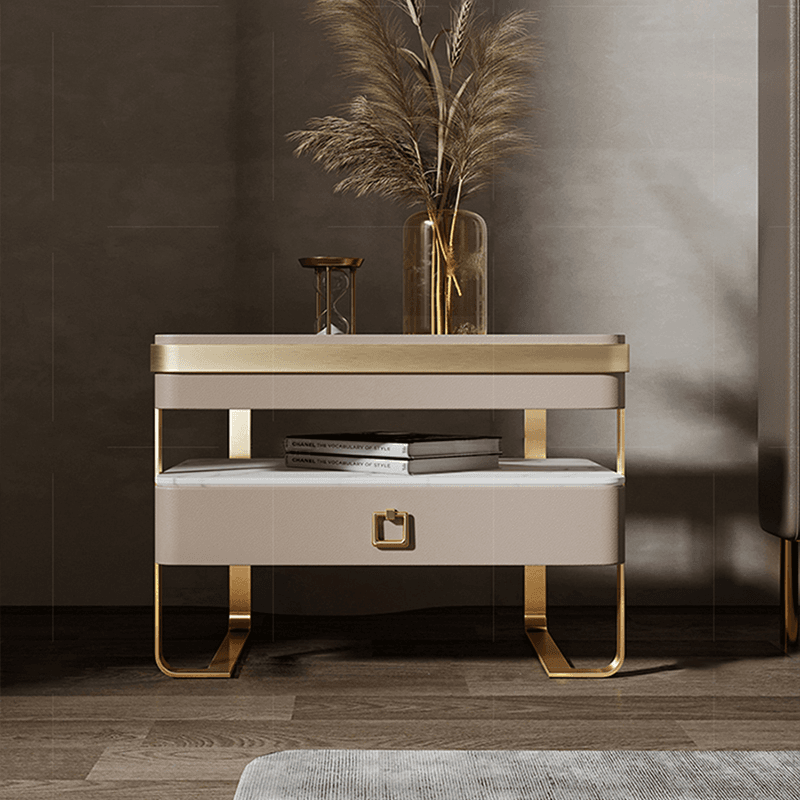
- Metal details. Specify the legs, trim and handles separately. If two suppliers both quote a gold-tone frame, ask each for the base metal and the finish sample used for its quote. Compare the samples beside the other metalwork in the room.
Inspect a sample and drawing
Check the top dimensions and height against the finished mattress and room plan. Open drawers and doors through their full travel. Look for aligned fronts, consistent gaps, secure hardware and edges without chips or loose banding. Ask the supplier to identify the specified substrate, finish and hardware; equipment names alone do not establish the quality of the delivered unit.
For covered composite-wood goods entering the U.S. market, request the applicable TSCA Title VI documentation and labels. The EPA’s consumer FAQ on formaldehyde standards, questions 2, 9 and 10, explains covered materials, labelling and third-party certification.
Match the unit to the bedroom
Check that doors, drawers and walking routes remain usable when someone occupies the bed. Coordinate lamps and charging cables with the room plan, and request written care instructions for the selected finish. Use the nightstand collection for design references, then send the required dimensions, storage layout, quantity and destination for a quotation.
